
Moving to Montenegro
Income tax up to 15%, corporate tax from 9% and the euro as currency: the situation in 2026 for the self-employed.
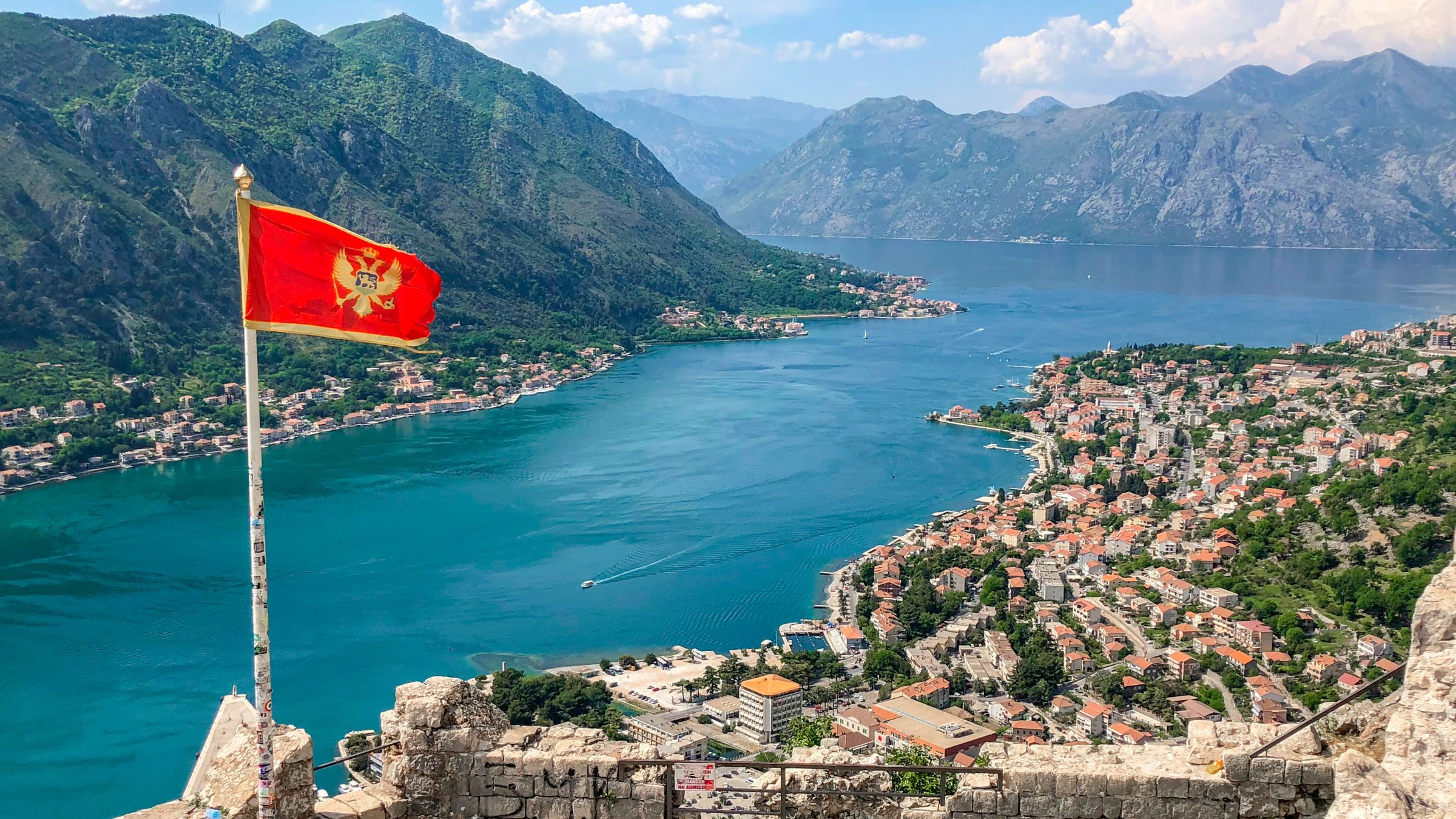
Why Montenegro? Low taxes on the Adriatic
→ Alle Länder im ÜberblickMontenegro lies on the Adriatic, is an EU candidate country and uses the euro. For the self-employed, the low rates are what count most: income tax is at most 15%, plus a municipal surtax. A Montenegrin company pays only 9% on profits up to €100,000.
However, Montenegro is neither a country without income tax nor a country with a territorial system. If you are tax resident there, you pay tax on your worldwide income. There is no non-dom status like in Malta or Cyprus.
Since Montenegro is not yet in the EU, as a German you need a residence permit for a longer stay. On this page you'll find the current situation: taxes, residence via a company, property or digital nomad status, leaving Germany and how a US LLC fits with Montenegro.
Montenegro at a glance
Montenegro offers low but regular tax rates on worldwide income and residence outside the EU with the euro as currency. These are the key points:
Income 9% and 15%
Profits from self-employment: 0% up to €8,400 a year, 9% up to €12,000, 15% above that. A municipal surtax is added.
Corporate tax from 9%
A company pays 9% on profits up to €100,000, 12% above that and 15% from €1.5 million. Dividends are taxed at 15%.
Euro as currency
Montenegro has used the euro as official currency since 2002 without being a member of the eurozone. You have no exchange rate risk.
EU candidate
All 33 negotiating chapters are open, 21 of them provisionally closed (October 2026). The government is aiming for accession in 2028.
Residence via a company
With your own company, property or as a digital nomad, you get a temporary permit. New minimum values from 2026 do not apply to Germans.
DBA from 1987
Germany continues to apply the 1987 DBA with former Yugoslavia to Montenegro. There is no new separate treaty yet.
Taxes in Montenegro 2026
Tax residency
You are tax resident in Montenegro if you have your residence or the center of your personal and economic interests there. You are also resident if you spend at least 183 days of the tax year in Montenegro. If you have homes in two countries, the double tax treaty decides.
Worldwide income instead of a territorial system
Residents pay tax on their income from all sources worldwide. There is no remittance basis or non-dom status. Non-residents pay tax only on income from Montenegro.
Income tax
According to PwC's summaries, profits from self-employment are subject to these annual brackets:
- up to €8,400: 0%
- €8,400.01 to €12,000: 9%
- over €12,000: 15%
The same rates apply to salaries on a monthly basis, with thresholds of €700 and €1,000. Other income, such as dividends and capital gains, is usually taxed at 15%. A municipal surtax of 13% is added to the income tax, 15% in Podgorica and Cetinje. With 15% income tax, this results in a burden of around 17%.
Important for the self-employed
If you are tax resident in Montenegro, you pay tax there on your worldwide income, even if your clients are abroad. An exception applies to holders of digital nomad status (see below).
Montenegrin company
A d.o.o. pays 9% on profits up to €100,000, 12% on the portion up to €1.5 million and 15% above that. Distributions are subject to a 15% withholding tax. According to PwC, Montenegro has no controlled foreign company (CFC) rules.
Social security
Since the “Europe Now 2” reform in October 2024, employees pay 10% toward pension and disability insurance and 0.5% toward unemployment insurance. Health insurance contributions were abolished in 2022; the health system is funded from the state budget. Business owners also pay contributions, with the assessment base linked to the average wage. Check the exact amount for your situation before registering.

Residence and visa
As a German, you can stay in Montenegro without a visa for up to 90 days within 180 days. For a longer stay, you need a temporary residence permit. You apply after entry at the Ministry of the Interior in the municipality where you live. Three routes are common for the self-employed:
- Your own company: You set up a d.o.o. or register a sole proprietorship and, as managing director, receive a combined residence and work permit.
- Property: As the owner of an apartment or house in Montenegro, you receive a one-year permit that can be renewed. It does not entitle you to work in Montenegro.
- Digital nomad: You work online for a foreign company or for your own business that is not registered in Montenegro. You need an income of at least three times the Montenegrin minimum wage.
New since January 17, 2026: Residence via property requires a minimum value of €150,000. If you renew via your own company, you must show that the company paid at least €5,000 in taxes and contributions in the previous year. Neither applies to citizens of the EU, the EEA and Switzerland, so not to Germans.
The documents you need include:
- valid passport
- proof of accommodation (ownership or certified lease)
- health insurance with coverage in Montenegro
- proof of sufficient means
- criminal record certificate with apostille
- documents for the respective ground, such as a commercial register extract or land register extract
Digital nomad status: The permit is valid for up to two years and can be renewed once for two years. After that, a new application is only possible after six months. Income from work for foreign clients is exempt from income tax for holders of this status. Whether new permits will continue to be issued after 2026 is not clearly settled. Check the current situation before applying.
After five years of uninterrupted temporary residence, you can apply for permanent residence. With EU accession, these rules would likely become much simpler for Germans.
Leaving Germany
A residence permit in Montenegro alone is not enough. To stop Germany from continuing to tax you in full, you have to genuinely give up your residence and your habitual abode in Germany. If you keep a home that is available to you at any time, you remain subject to unlimited tax liability in Germany.
Exit tax (Wegzugsbesteuerung): If you hold shares in a corporation (1% or more), moving away can trigger a tax on the value of those shares, as if you had sold them. This can also affect a US LLC if it is classified as a corporation in Germany. On application, you pay the tax in seven annual installments.
Extended limited tax liability (erweiterte beschränkte Steuerpflicht): With a maximum burden of around 17%, Montenegro is well below two-thirds of the German burden. From a German perspective, Montenegro is therefore likely to count as a low-tax country within the meaning of § 2 AStG (German Foreign Tax Act). If you, as a German citizen, still have significant economic interests in Germany, Germany can tax your German income more heavily for up to ten years. The 9% corporate income tax is also below the German 25% threshold for low taxation.
Double tax treaty (DBA): There is no separate DBA between Germany and Montenegro. In 2011, both countries agreed by exchange of notes to continue applying the treaty with the Socialist Federal Republic of Yugoslavia of March 26, 1987. Among other things, it determines where you are considered resident if you have homes in both countries. Check the current status in the overview of the German Federal Ministry of Finance.
Does a US LLC work with Montenegro?
Montenegro taxes worldwide income. A US LLC therefore does not automatically protect you from Montenegrin tax. How Montenegro classifies a US LLC is not expressly regulated by law. Broadly, there are two cases:
- The LLC is treated as transparent. Then its profit counts as your own income and is taxed in Montenegro at up to 15% plus the municipal surtax.
- The LLC is treated like a corporation. If you run it from Montenegro, its place of management is likely to be there. It can then become liable to corporate income tax in Montenegro, and distributions to you cost a further 15%.
On the plus side: Montenegro has no CFC rules, and the rates are low even in the unfavorable case. With digital nomad status, income from work for your own business not registered in Montenegro may be exempt from income tax. Whether that applies to your US LLC and how long the status will still be offered should be checked case by case beforehand.
In the free intro call, we'll look together at whether Montenegro suits your business and how your US LLC should be set up for it.
Häufige Fragen
Do I have to pay tax in Montenegro if my clients are abroad?
Yes, if you are tax resident there. Montenegro taxes worldwide income; where your clients are located doesn't matter. Digital nomad status can be an exception.
How high is income tax in Montenegro?
For the self-employed, a 0% rate applies to the first €8,400 a year, 9% up to €12,000 and 15% above that. On top comes a municipal surtax of 13 to 15% of the tax.
Can I get a residence permit via property as a German?
Yes. The €150,000 minimum value in force since January 2026 does not apply to EU citizens. The permit is valid for one year, can be renewed and does not allow you to work in Montenegro.
Can I pay with euros in Montenegro?
Yes. The euro has been the official currency since 2002, even though Montenegro belongs neither to the EU nor to the eurozone.
Is there a double tax treaty with Germany?
Yes. Germany continues to apply the 1987 DBA with former Yugoslavia to Montenegro. There is no new separate treaty yet.